

Search and Rescue Without Signal: Reinventing Communication in Virginia’s Twin County Region

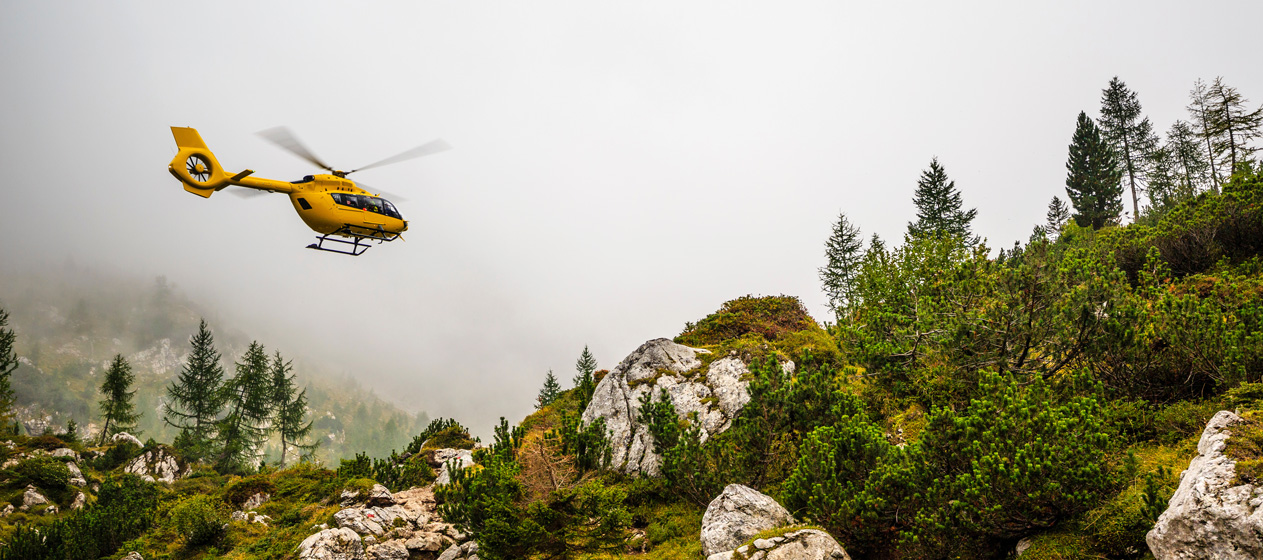
In rural America, search and rescue teams, law enforcement officers, and fire departments often operate in places with limited cell coverage and few communications options. Dense tree lines, mountain valleys, and miles of unlit roadway can quickly turn a routine response into a coordination challenge. Portable radios lose coverage once responders leave their vehicles. Neighboring agencies operate on different radio frequencies or technologies. And when someone calls for help, simply saying “I’m over here” isn’t enough.
In southwest Virginia’s Twin Counties region, those realities are part of daily life. Large geographic coverage areas, limited staffing, and inconsistent radio interoperability have historically made maintaining situational awareness a persistent challenge – especially during multi-agency search and rescue operations.
We recently sat down with Shane Prescott, who manages Emergency 911 Radio Communications for the Twin County Region, to talk about the communication gaps rural responders face, how those gaps impact search and rescue, law enforcement, and fire department operations, and what it takes to build a more resilient network in the most difficult terrain.
GovDesignHub (GDH): What is connectivity like in the Twin Counties region of Virginia? Is there reliable cellular service in this region?
Shane Prescott: We’re a rural, mountainous region in southwest Virginia, so connectivity varies widely. In the more populated areas, cellular and internet service are generally reliable. But once you move beyond those areas, coverage becomes inconsistent very quickly.
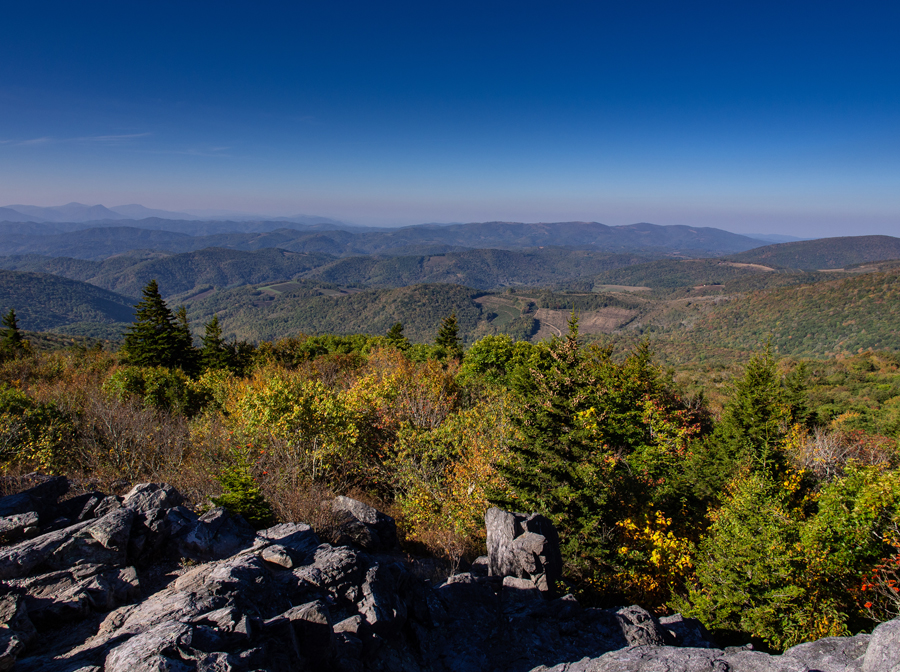
Grayson County, to our west, is one of the most remote and connectivity-challenged areas in the state. It’s home to some of the largest mountains in Virginia, and there’s essentially one main road running through that part of the county. Beyond that, you’re dealing with narrow, one-lane rural roads and rugged terrain, which makes both cellular coverage and infrastructure expansion difficult.
GDH: What connectivity and communications capabilities are available to emergency responders and law enforcement in this region during emergency and disaster response scenarios?
Shane Prescott: We recently deployed a new radio system, and that has improved coverage compared to what we had before. However, there is still essentially a single path for radio traffic to travel back to our dispatch centers.
Prior to this upgrade, there was little to no reliable portable radio coverage across much of the region. In fact, we were seeing coverage gaps for handheld radios in roughly 83 to 85 percent of the county.
Mobile radios installed in vehicles performed better, primarily because they have larger antennas and more transmission power. But once responders left the vehicle—which is common during fire and rescue calls or law enforcement incidents—they were dependent on handheld radios, and that’s where the communications gaps became a serious concern.
“Prior to this upgrade, there was little to no reliable portable radio coverage across much of the region. In fact, we were seeing coverage gaps for handheld radios in roughly 83 to 85 percent of the county.” –Shane Prescott
In rural areas like ours, manpower is always limited due to salary constraints and general availability. It’s not uncommon to have just two or three deputies on duty at three o’clock in the morning, covering a county that takes more than an hour to drive from one end to the other. That means a deputy could be responding alone, in an area with spotty radio coverage, with limited ability to call for help, and with backup potentially an hour away.
That was the reality we were operating in previously.
GDH: Have communication and situational awareness been a challenge in these scenarios in the past? Any anecdotes that you can share?
Shane Prescott: Yes, communication and situational awareness have absolutely been challenges in the past. In our region, whether it’s a fire and rescue call or a law enforcement situation, responders often leave their vehicles and operate on foot — sometimes deep into wooded areas. In those scenarios, they’re in uneven terrain with limited visibility and often inconsistent radio coverage.
In those moments, the ability to clearly communicate and share location becomes critical. If a deputy is physically wrestling with a suspect and manages to key up a radio, what can they realistically say? “I’m over here by the tree?” That doesn’t provide meaningful direction to backup units.
“When we evaluated [options] based on cost per unit, capabilities, and the operational goals we were trying to achieve, goTenna offered the best balance of functionality and price.” –Shane Prescott
We’ve needed a way for responders not only to call for help, but to immediately share their precise location so others can see exactly where they are and respond quickly. In situations like that, seconds matter – and vague radio traffic simply isn’t enough.
GDH: Why is the region looking to build an interoperable mesh network that covers this area? What capabilities would this enable? How would it be used?
Shane Prescott: There were two primary reasons we went down this road. The first was search and rescue. We have a lot of state and Federal parks in this area—a lot of trails, a lot of river access—and people are constantly out hiking and exploring. When someone gets lost, maintaining awareness of where responders are in that terrain becomes critical.
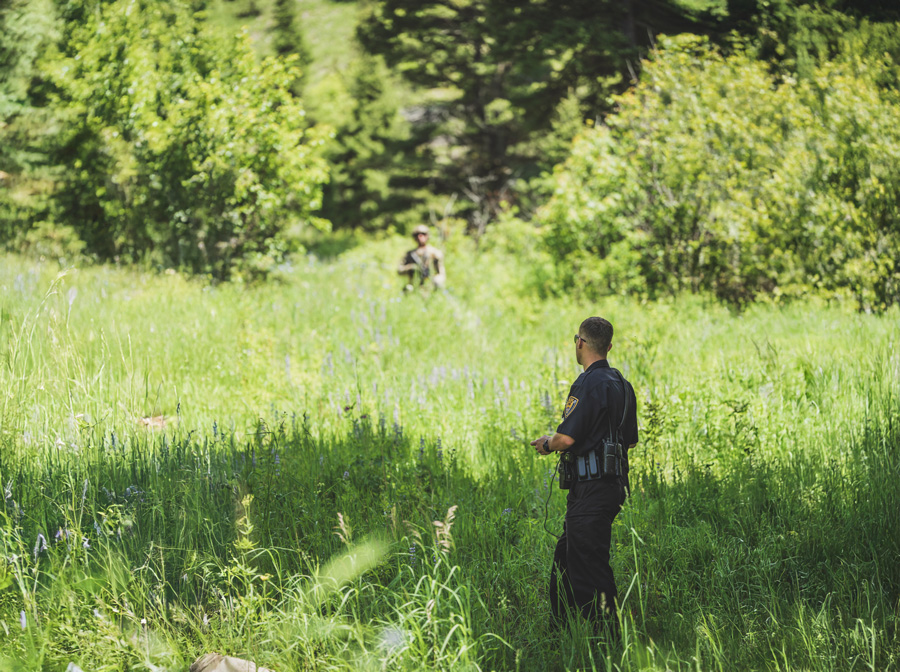
The second was bridging a gap between law enforcement’s day-to-day activities and dispatch. It wasn’t necessarily an advertised, cookie-cutter feature of the mesh equipment, but we saw value in having a monitor in dispatch that could show where all available assets were at any given time without interrupting an officer who was already en route.
GDH: What hardware and solutions are being leveraged for this network? How is it being monitored and managed?
Shane Prescott: We’re leveraging goTenna’s Pro X2 devices, paired with Android handsets – specifically Samsung XCover devices. Each device was preconfigured to make it as simple as possible. The idea was: take it, turn it on, and don’t worry about the rest. We also enabled push-to-talk functionality on the phones, along with Android Team Awareness Kits (ATAK).
To support the network, we deployed 10 relays. Some are fixed-site assets located at tower sites, and others are deployable units that go out with response kits. Each kit includes several devices, a tablet, and paired phones, all set up ahead of time so they’re ready to use.
GDH: Why did the Twin Counties Region choose goTenna’s solutions for this particular use case?
Shane Prescott: We issued a formal Request for Proposal for mobile mesh networking technologies and received multiple bids. When we evaluated them based on cost per unit, capabilities, and the operational goals we were trying to achieve, goTenna offered the best balance of functionality and price.
GDH: How have users received the mobile mesh network? Has the region benefited from it?
Shane Prescott: The network has been deployed, but full adoption is still evolving. The biggest challenge hasn’t been the technology itself; it’s the human element. Some people are simply intimidated by it. Others don’t feel like they know enough about it, so they’re hesitant to embrace it.
Overall, it’s been received well, but education and familiarity are key. The technology is in place and works as intended – now it’s about building comfort and consistency in how it’s used.
“Don’t wait until you’re in the middle of a large search and rescue operation—when it’s five degrees outside and already dark—to figure it out. Carry [mobile mesh radios] during day-to-day operations.” –Shane Prescott
One of the most common things I’ve heard—especially after large events or search-and-rescue operations—is that leadership says, “We really should have been using that equipment all along.” In retrospect, they recognize how helpful it would have been. That’s part of why we’re planning a few field training exercises this spring to help people become more comfortable with it and use it consistently.
GDH: For public safety agencies or organizations interested in deploying goTenna’s mobile mesh network, what guidance or best practices would you offer to ensure a successful rollout?
Shane Prescott: The biggest thing I would say is, the more you use it, the better you’ll be able to use it.
We’ve had situations where teams pulled it out in a pinch. They didn’t fully understand it, but they were able to work through it and make it work. That said, it’s much better to build familiarity before you’re in a high-stress situation.
Don’t wait until you’re in the middle of a large search and rescue operation—when it’s five degrees outside and already dark—to figure it out. Carry it during day-to-day operations. Even if you don’t issue it to everyone, assign it to key personnel and have them use it consistently. Learn what it does well, and understand its limitations ahead of time.
ATAK, in particular, can be frustrating for some people. It’s very powerful and does certain things extremely well, but in a hectic moment, that complexity can become a challenge if users aren’t comfortable with it. Regular use and training make a significant difference.
The Author



No Comment