

Admiral Olson on Preparing SOCOM for Great Power Competition

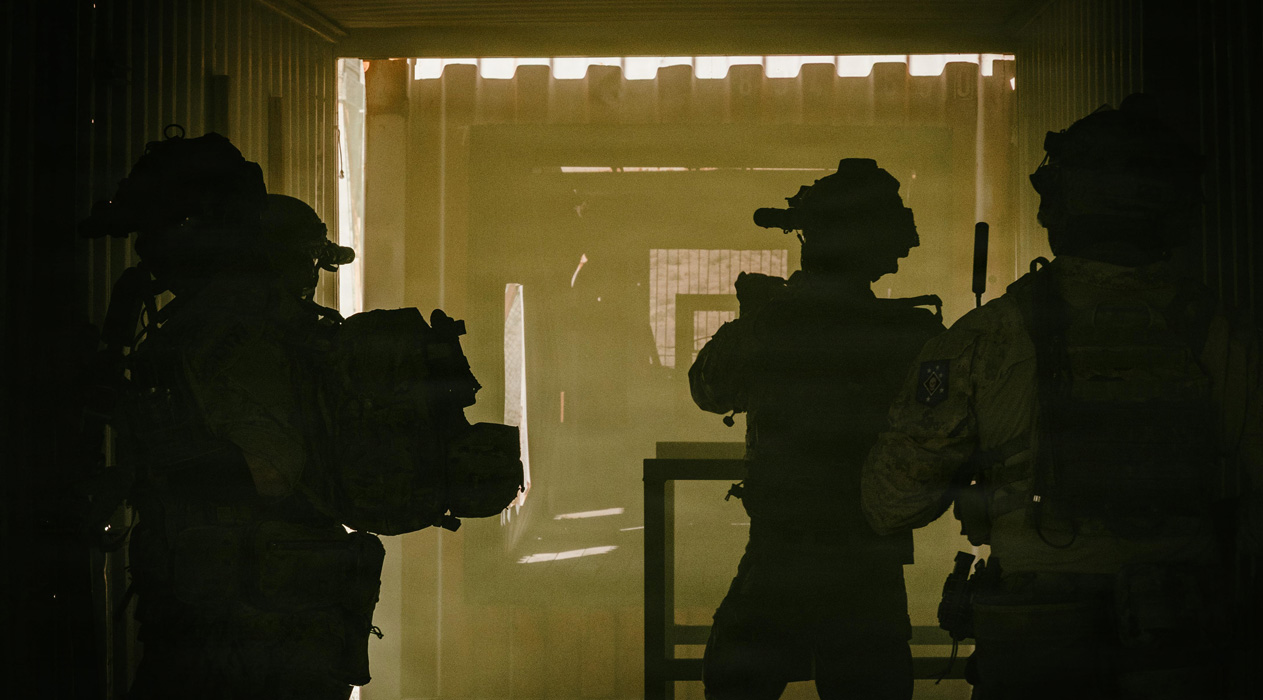
In the last article on The Last Mile, we sat down with Admiral Olson, a retired Navy SEAL, former U.S. Special Operations Command (SOCOM) Commander, and current advisory board member of AstraNav, to discuss the common mistakes that emerging technology companies and innovative technology startups make when trying to work with the U.S. Department of War (DoW).
This is a particularly important topic today, as the DoW works to reshape its acquisition processes to expedite the delivery of innovative new solutions for the warfighter – helping them to better keep pace with the threats being faced from a new generation of peer and near-peer adversaries.
As the War in Ukraine has demonstrated, warfare has changed significantly since the last time the U.S. faced Great Power Competition. Today’s modern battlefield is dominated by drones and autonomous vehicles. And sophisticated electronic warfare (EW) capabilities create an environment where the same signals and networks needed to power advanced warfighting capabilities could be denied.
In the second part of our discussion with Admiral Olson, we explored this new era of warfighting and the modern challenges facing today’s Special Operations Forces (SOF).
The Last Mile (TLM): As the U.S. military shifts its strategic focus away from the Global War on Terror to Great Power Competition, there will be changes within the military and SOCOM. What challenges do you see in this transition?

Admiral Olson: Yes, it’s a shift, but not a total shift. What Special Operations Command has always prided itself on is its ability to operate across both sides of warfare. That includes the highly focused kinetic side, but also the much broader mission of preventing conflict. SOCOM does both. And while it must always be ready to run to the sound of the guns, preventing that sound from ever happening is actually a core reason why it was created.
The heavy focus on the Global War on Terror is now shifting toward a more strategic level of competition. That doesn’t make SOCOM less relevant – if anything, it makes it more relevant. There is a great deal SOCOM can do in this space before war. I describe this as “war around the edges.”
We are already in conflict with near peers – economic conflict, informational conflict, political and diplomatic conflict. We’re working to build alliances and shift the balance in our favor, while other countries are being courted by both sides.
Building alliances takes real work. It requires deep understanding, long-term relationship building, language skills, and cultural and geopolitical awareness. Many of these countries are standing at a roulette wheel with a chip in their hand, knowing they’ll eventually have to place that bet on one side or the other. If they bet that chip on our adversaries, we lose. If they bet it on us, that helps prevent power from consolidating in ways that work against our interests.

SOF teams can do a great deal in that space. And this isn’t all soft power. It’s not just going into countries to build schools or hand out cookies. Much of it is the hard work of training, technology exchange, strategic development, and emergency preparation – missions that are often better executed by small, high-performing teams than by brigades or divisions. So, I don’t see SOCOM being out of work anytime soon.
TLM: As we’ve seen in Ukraine and elsewhere, it appears that we are entering an era of digitized, distributed conflict, where AI and autonomous systems will be prevalent. As a board member for companies like AstraNav, where do you see the most revolutionary changes occurring that will fundamentally reshape the battlefield over the next decade?
Admiral Olson: I think quantum computing, AI, autonomous platforms, hypersonics, and space-based capabilities are clearly part of the future of warfare. Warfare is becoming far more technological. That said, we can’t default to technology as the answer to everything.
One of SOCOM’s enduring truths is that humans are more important than hardware. Technology provides augmenting capabilities and additional information that helps humans make better decisions, but it doesn’t replace them.
I’m interested in how AI will be used to train autonomous platforms. I see that as a real breakthrough. When autonomous systems are synchronized and able to operate with fewer humans, that will significantly change the nature of warfare. We’re already seeing steps in that direction.
“While the battlefield will continue to change with the introduction of large numbers of autonomous platforms, aware, educated, experienced, and well-trained humans will remain the most important element of warfare.” –Admiral Olson
But AI has limitations. It has no soul, no conscience, and it is often wrong, based on its source inputs. It must be treated as another suspect source, much like information provided by a human researcher. Until it’s validated, it shouldn’t be trusted outright. That will improve over time, but we’re not there yet.
I think we’re seeing a dynamic with AI and machine learning where there was an initial rush to adopt it everywhere, and now the pendulum is swinging back toward a more disciplined approach – recognizing its importance, but not allowing AI to make decisions for us, because we know those decisions will often be wrong.
While the battlefield will continue to change with the introduction of large numbers of autonomous platforms, aware, educated, experienced, and well-trained humans will remain the most important element of warfare.
TLM: The military’s reliance on GPS is a recognized vulnerability, particularly for forward-deployed SOF units operating in contested electronic warfare environments. What is the most urgent technological or operational requirement for SOF units to ensure assured Position, Navigation, and Timing (PNT) and resilient communication capabilities when facing GPS denial?
Admiral Olson: With GPS denial, deliberate jamming, and spoofing, you can’t assume absolute reliability or accuracy anymore – especially when GPS is also naturally denied by contested terrain. Special operations forces routinely operate in environments where GPS is intentionally denied by an adversary or naturally unavailable.
Because of that, there’s now a massive effort across the DoD to find alternatives to GPS, and a number of approaches are emerging. I’m drawn to M-GPS because it feels more real. It’s the Earth telling us where we are. All you have to do is the math to translate what the Earth is telling you into position, and once you do that, it’s unspoofable and undeniable. It works inside caves, underground, and in environments where GPS simply doesn’t.
“AstraNav…adds almost no weight and consumes almost no power…paired with goTenna, it could become part of the existing kit.” –Admiral Olson
That’s why I was drawn to AstraNav and M-GPS. I like the idea that humans have always used the Earth—through things like the compass—to navigate. What we’ve done now is take that magnetic reading of the Earth and make it precise in three dimensions. There’s something almost magical about that, and I think it adds value to virtually everyone, everywhere.
TLM: Can you think of a time in your past when you could have used a solution like AstraNav? What do you think the future of AstraNav looks like in the coming years?
Admiral Olson: I served before there was GPS. If AstraNav had been available when I was a junior officer, I would have valued it as one of the most important pieces of technology I had. Now that we understand GPS can be denied whenever and wherever an adversary chooses—either precisely or across broad geographic areas—I find myself thinking about navigation differently.
Yes, AstraNav requires some mapping upfront, but once that’s done, it becomes the primary system, not an alternative to GPS. At that point, GPS becomes the backup. If you have something that is as precise and reliable as AstraNav’s over-mapped terrain, why would you treat it as anything other than the main navigation system?
AstraNav stands out because it adds almost no weight and consumes almost no power. It’s also contained within the systems operators are already carrying. Paired with goTenna, it could become part of the existing kit—it doesn’t require an additional device just to know where you are. I find that extraordinarily valuable.
I think the future for AstraNav and this technology is significant. I also really like the relationship with goTenna and what that could enable, particularly the ability to geo-pin communications on demand. That’s a major step forward, and the overall potential here is enormous.
Header image was sourced from the Defense Visual Information Distribution Service (DVIDS).
The Author



No Comment